Made possible by exploring innovative molded plywood techniques, Iskos-Berlin’s Soft Edge Chair blends strong curves with extreme lightness to create a three-dimensionality not usually possible with 2-D plywood.
Description
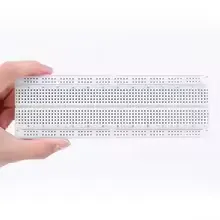
The standard breadboard used for electronic experiments which engineers use to build and verify their circuits. The board functions as a versatile circuit building tool which students, engineers, and hobbyists can use to create electronic circuits without needing to make permanent solder connections.
**Key Features**
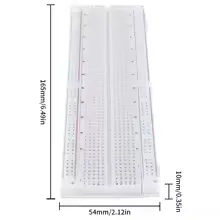
– **Solderless Design**: Users can quickly assemble and change components because they need to insert components and wires into tiny holes which the system holds with spring clips. – **Total Tie Points**: The system usually includes 830 points which are divided into two groups. – **Terminal Strip (main area)**: 630 points (10 columns and 63 rows) for general circuit components and connections. – Distribution Strips (power rails) : 200 points (usually two sets of two columns which feature red and blue/black color coding for power and ground) which distributors use to distribute different voltage levels. – Standard Spacing**: All holes have a standard 0.1″ (2.54mm) spacing which works with most through-hole components and Dual In-line Package (DIP) ICs that need to cross the center gap. – Material and Durability**: The product uses strong ABS plastic materials which contain nickel-plated phosphor bronze and nickel silver alloy spring clips made for multiple uses. – Wire Compatibility**: The product supports solid-core wire usage which extends from 20 to 29 AWG with 22 AWG being the most frequently used wire size. – Physical Design**: The majority of boards contain interlocking parts which enable users to connect several boards together for bigger projects. The boards also have an adhesive backing which allows them to stay attached to a base plate or chassis. – Dimensions : The standard dimensions measure about 16.5 centimeters by 5.5 centimeters (6.5 inches by 2.2 inches).
Connecting Diagram :
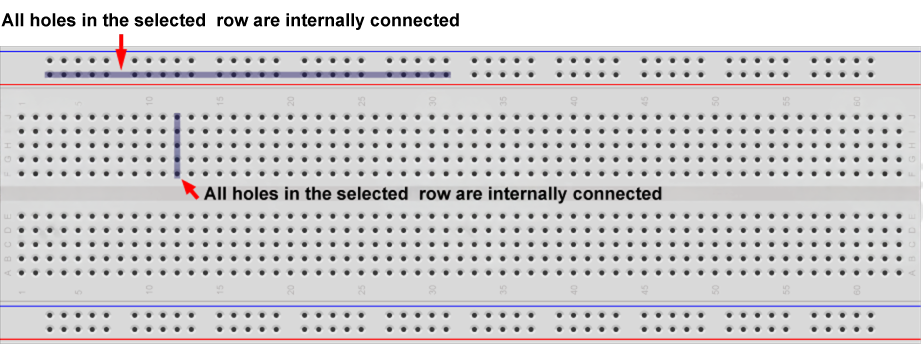
The board contains metal strips which run underneath it to create connections between its upper holes. The metal strips are laid out as shown below. The top and bottom rows of holes create horizontal connections which break at their center point, while the other holes connect through vertical paths.
The selected row contains connections between all its holes which connect to the holes in the selected column. The set of connected holes can be called a node:
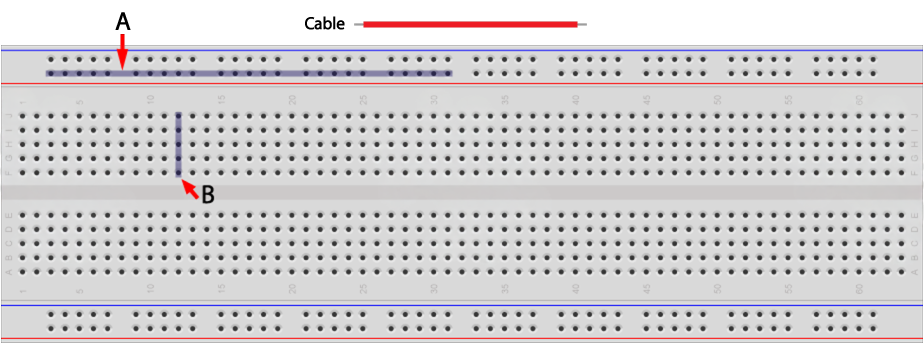
You need to connect any lane hole to any column hole which further connects the selected row node (node A) and column node (node B).
The selected row contains connections between all its holes which connect to the holes in the selected column. The set of connected holes can be called a node:
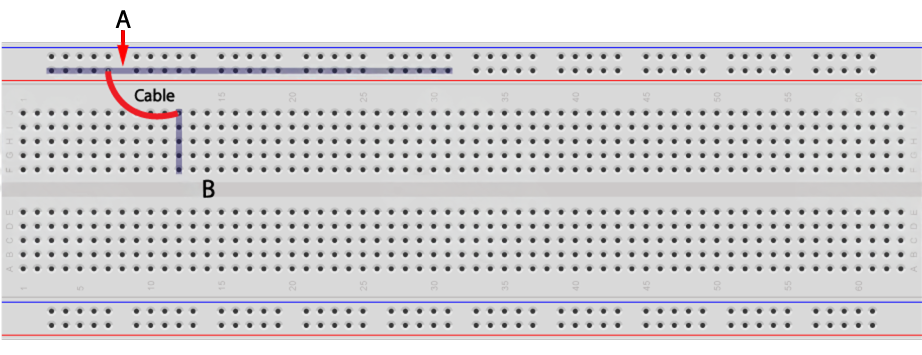
Currently, the selected column and row (nodes B and A respectively) have definite connections:
Why Choose This Breadboard :
The 830-point solderless breadboard provides accurate performance while it maintains durable operation and user-friendly features. The phosphor bronze contacts with nickel plating ensure stable electrical connections and long service life. The printed legends help users identify rows and columns quickly, reducing wiring errors.
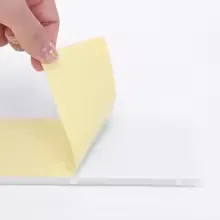
The product derives its suitability for permanent installations and robotics and electronics training kits from its combination of strong metal backing and adhesive layer. The system allows users to link several breadboards for creating an extended workspace which they can use in their complex projects.


Reviews
Clear filtersThere are no reviews yet.